Brown leaves can have different patterns
A brown tip, crispy edge, soft patch, or older lower leaf can each point to different care context. Leafentia AI helps you describe what is visible before choosing next steps.
 Leafentia AI
Brown leaf tips, edges, or patches can be confusing. Leafentia AI helps you scan, save, and review Care Guidance for visible plant changes.
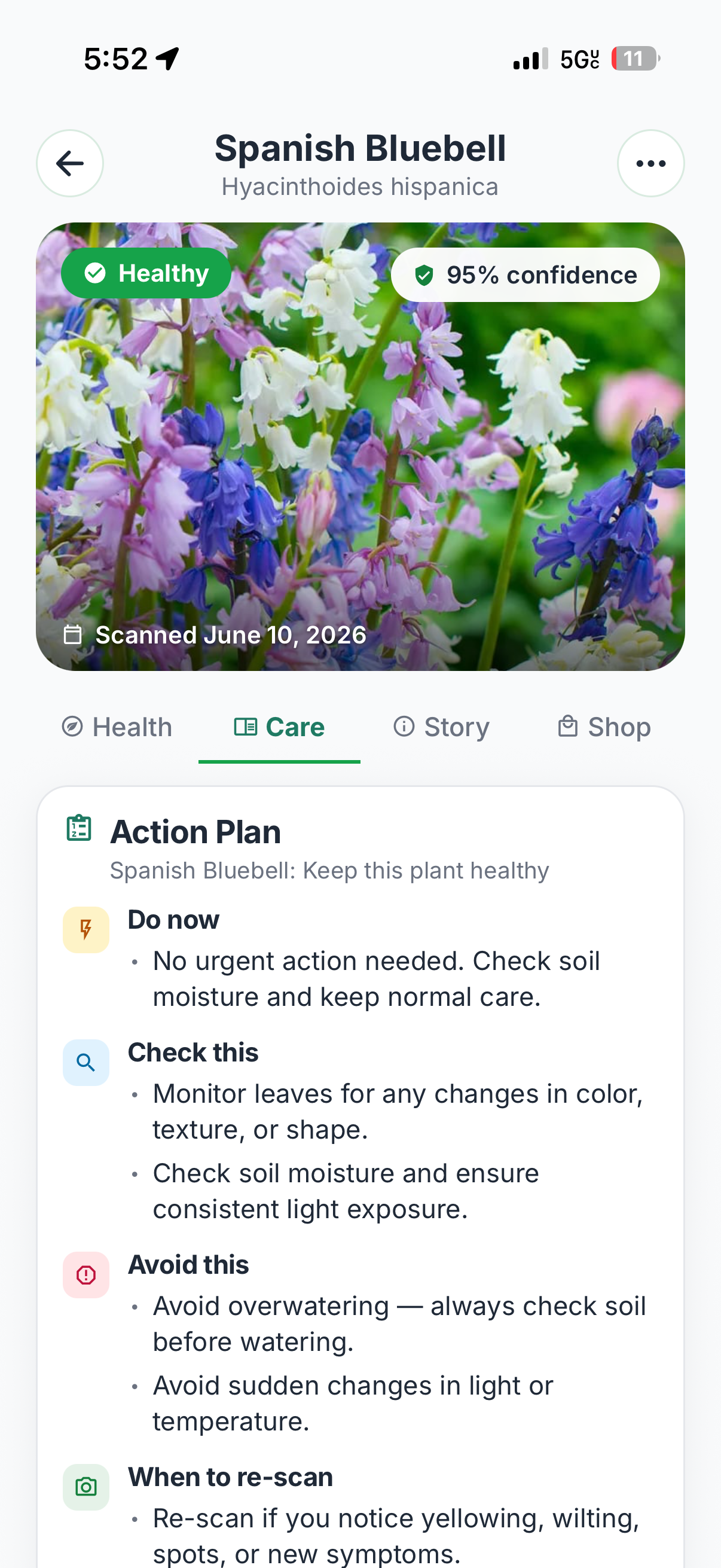
A brown tip, crispy edge, soft patch, or older lower leaf can each point to different care context. Leafentia AI helps you describe what is visible before choosing next steps.
Watering, direct sun, humidity, temperature changes, and soil dryness can all matter. Plant Science AI is most useful when it can compare several signals at once.
Plant Health Insight explains possible issues in careful language so you can make practical decisions without alarm or certainty claims.
Leafentia AI can help you consider small adjustments, such as reviewing watering timing, moving the plant away from harsh light, or tracking whether new leaves look healthier.
Save scans to your Personal Garden and re-scan when the plant changes, so brown leaf patterns can be reviewed with history instead of memory alone.
Brown leaves may be connected to water stress, light exposure, low humidity, natural aging, or other care conditions. Visible pattern and plant context matter.
Existing brown areas usually do not turn green again, but new growth can provide useful feedback after care adjustments. Leafentia AI can help track changes.
Leafentia AI helps review visible signs, possible issues, Care Guidance, and re-scan history for informational plant-care support.