Drooping is a visible sign, not a single answer
Leaves and stems can droop for several reasons. Leafentia AI helps you avoid jumping to conclusions by pairing the visible sign with care context.
 Leafentia AI
A drooping plant may need a closer look at water, light, roots, temperature, or recent changes. Leafentia AI helps organize those clues with Plant Science AI.
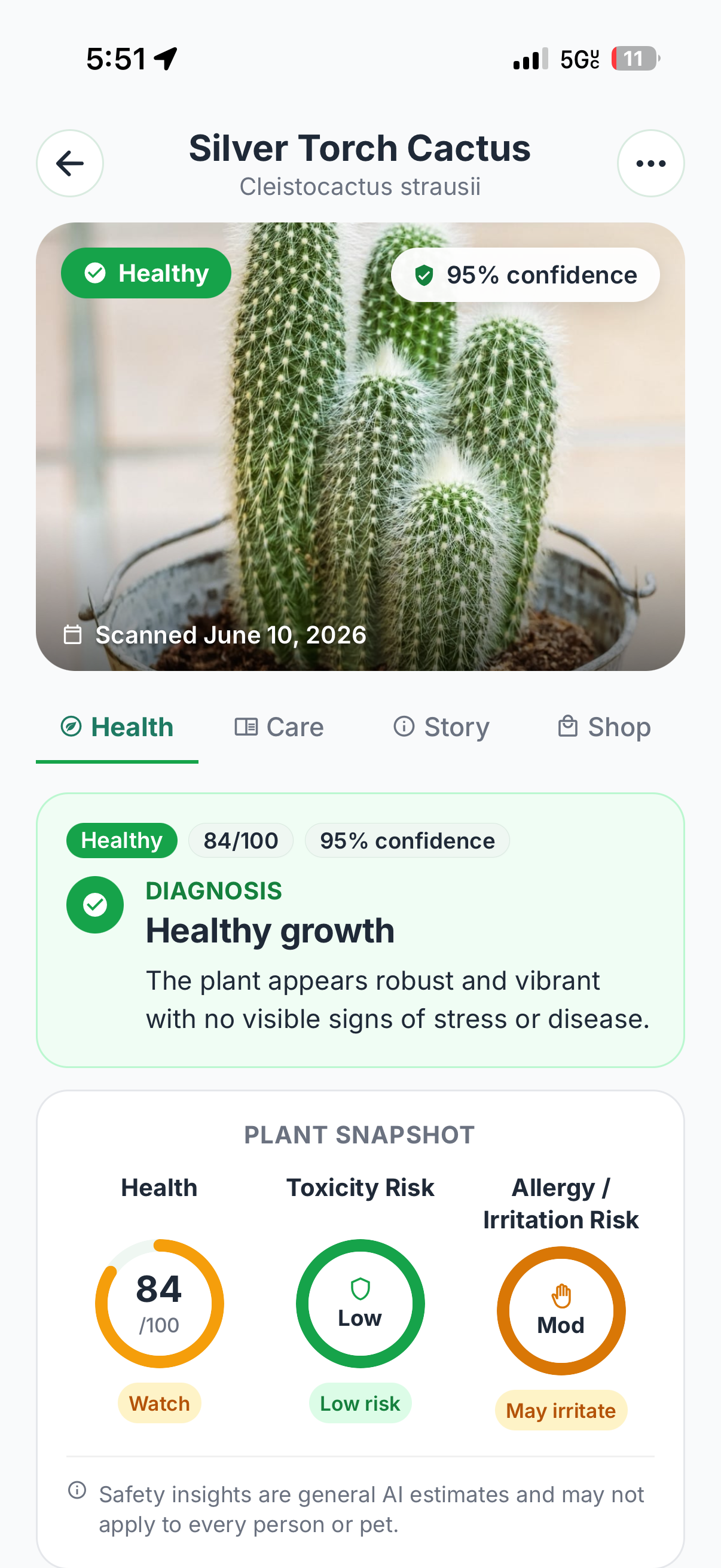
Leaves and stems can droop for several reasons. Leafentia AI helps you avoid jumping to conclusions by pairing the visible sign with care context.
Check whether the soil is wet or dry, whether the plant has been in strong light, and when drooping started. These clues make AI Health more useful.
Plant Health Insight can summarize possible issues such as watering imbalance, heat stress, transplant stress, or light mismatch while keeping wording informational.
Care Guidance can help you consider practical actions like checking soil moisture, adjusting light, noting recent changes, or waiting before making another adjustment.
Save the plant and re-scan later to compare posture, leaf color, and new growth inside your Personal Garden.
Drooping may be linked to watering, heat, light, roots, recent movement, or natural daily changes. Leafentia AI can help review visible signs and care context.
Not always. It is helpful to check soil moisture and recent care history first because drooping can appear in both wet and dry conditions.
Yes. Re-scans can help you compare visible changes after care adjustments and keep plant history organized in your Personal Garden.